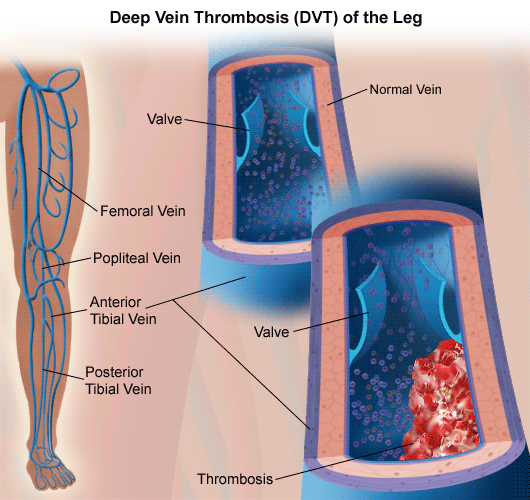
What are the aims of treatment for a deep vein thrombosis?
The aims of treatment are:
- To prevent the clot spreading up the vein and getting larger. This may prevent a large embolus breaking off and travelling to the lungs (a pulmonary embolus).
- To reduce the risk of post-thrombotic syndrome developing.
- To reduce the risk of a further DVT in the future.
Walking regularly but raising your leg whilst resting.
- Unless your doctor advises against this, you should walk regularly after you are discharged from hospital. Walking is thought to improve circulation in the affected leg and may help to reduce your risk of further DVT.
- When you are resting, as much as possible - raise your leg. This reduces the pressure in the calf veins, and helps to prevent blood and fluid from pooling in the calves. Raised means that your foot is higher than your hip so gravity helps with blood flow returning from the calf. The easiest way to raise your leg is to recline on a sofa with your leg up on a cushion. Sitting on the sofa or in a chair, with your feet on a footstool or pouffe is not keeping your feet up - the feet are well below your hips in this position.
- Raise the foot of the bed a few inches if it is comfortable to sleep like this. This is so your foot and calf are slightly higher than your hip when you are asleep.
Compression stockings
Most people who develop a DVT are advised to wear compression stockings. This treatment has been shown to reduce the risk of a recurrent DVT, and can also reduce the risk of developing post-thrombotic syndrome. You should wear the stockings each day, for at least two years. If you do develop post-thrombotic syndrome, you may be advised to wear the stockings for more than two years.
The best type of stockings (or elastic compression hosiery as they are known), are grade 3 strength. This means that they are able to squeeze the legs, with a certain degree of force. This means that they will feel pretty tight. This is normal. It will not be as comfortable as the socks, tights or stockings you are used to wearing, and they can take a bit of getting used to. Some people really find that they cannot tolerate grade 3 stockings, and so grade 2 stockings (which create less of a squeezing force) can be used instead. It is not as good as wearing the grade 3 stockings, but better than nothing
Note: a compression stocking used following a DVT should be fitted professionally after an assessment and accurate measurement. Do not just buy over-the-counter support stockings or flight socks that may be the wrong class or size and which may potentially cause more damage.
