A pulmonary embolism (PE) is where a thrombus has broken off from a DVT (usually in the leg) and become stuck in one of the blood vessels in the lung. Pulmonary emboli is also part of venous thromboembolism. (See separate leaflet called 'Pulmonary Embolism' for more information.
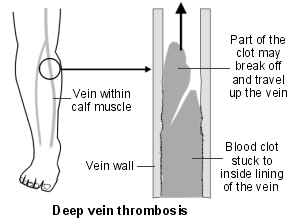
A deep vein thrombosis (DVT) is a blood clot in a vein, usually a leg vein. The most common cause is immobility. A complication can occur in some cases where part of the blood clot breaks off and travels to the lung (pulmonary embolus). This is usually prevented if you are given anticoagulation treatment.
What is a DVT / deep vein thrombosis?
A DVT is a blood clot that forms in a deep leg vein. Veins are blood vessels that take blood towards the heart.
Deep leg veins are the larger veins that go through the muscles of the calf and thighs. They are not the veins that you can see just below the skin, neither are they the same as varicose veins. When you have a DVT, the blood flow in the vein is partially or completely blocked by the blood clot.
A calf vein is the common site for a DVT. A thigh vein is less commonly affected. Rarely, other deep veins in the body can be blocked by blood clots.
A DVT is part of a group of problems together known as venous thromboembolism (VTE).
Hospital death rates worst in North West
"Death rates in Wigan's hospitals are the worst in the North West Latest figures reveal the standardised mortality rate for Wrightington, Wigan and Leigh (WWL) NHS Trust in 2007 was 124, equating to more than 3,000 deaths in hospital. That makes the Trust the worst performing in the region and one of the worst in the country."
Burnley Express by Natalie Walker Published date: August 5th 2008
------------------------------------------------------------------------------------------------------------------------------------------
Ten NHS trusts have the worst death rate
Wrightington Hospital named as one of the worst in the Country.
By Alastair Jamieson The Sunday Telegraph
Last Updated: 10:06AM BST 29 Mar 2009
